THE PROBLEM
All across the world, there is an issue of students from a lower socioeconomic status, who are disadvantaged in the education system. An individual's socioeconomic status has an impact on their quality of education and post-secondary enrolment. The education system, teachers and family members of these students believe they are not capable of finishing high school or further education. Teachers make assumptions about a student, and their abilities when they are from a lower-income (McKay & Devlin, 2015).
Students from lower-income families are more likely to drop out of school, which affects their job quality in the future.

Socioeconomic status has an effect on education when students have unequal access to resources. The digital divide occurs because not all students have the same technology (laptops etc). The social capital is also an advantage for some students of a higher socioeconomic status, this occurs when students go on trips and gain experiences. Some students are disadvantaged and they do not have the same opportunities. The mental physical and social health of students is affected by poverty.

RESEARCH FINDINGS
Research on the issue of socioeconomic status linked to success suggests that students of lower income have a lower attendance rate, they are “four times more likely to miss 10% or more of eligible school days” (Gennetian et al., 2018). Academic success is associated with attendance in school, students that present have more time to learn the curriculum and develop a consistent schedule. The absence of students from lower socioeconomic status is linked to household circumstances. For example, unstable family income or household, and psychological distress (Gennetian et al., 2018). As families from higher socioeconomic status also have stress and dysfunction, they do not have the concern about unpredictable hours or job loss as they have greater savings and credit to resort to (Gennetian et al., 2018). There is less stress in financial situations children in the family do not require to contribute income to pay the bills. Stress can arise from the balance of school and work, many teenagers have jobs, but when they must pick up more shifts and work a double to pay their bills, school falls behind. Furthermore, students from a lower socioeconomic status are more likely to have complications that require them to miss school, resulting in lower academic performance.
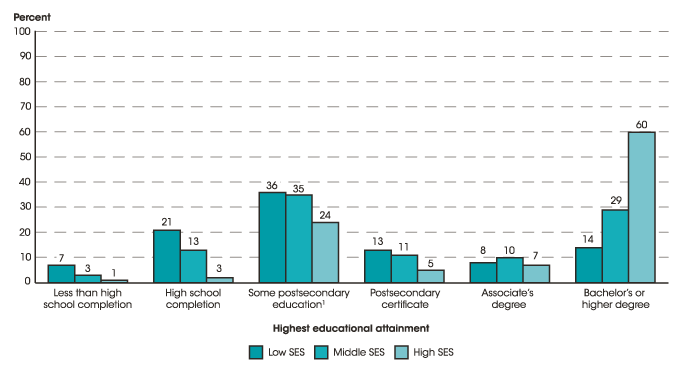
The following graph from the NCES demonstrates the relationship between socioeconomic status and education level.